Sources and update record
Sources: 8 named sources listed below; 0 with an access date. 8 access dates are not recorded or valid.
Reported status: No separate status recorded. Read the dated article; do not assume it is a live or final result.
Production: No separate production-method record. This is not a claim of human review or first-hand reporting.
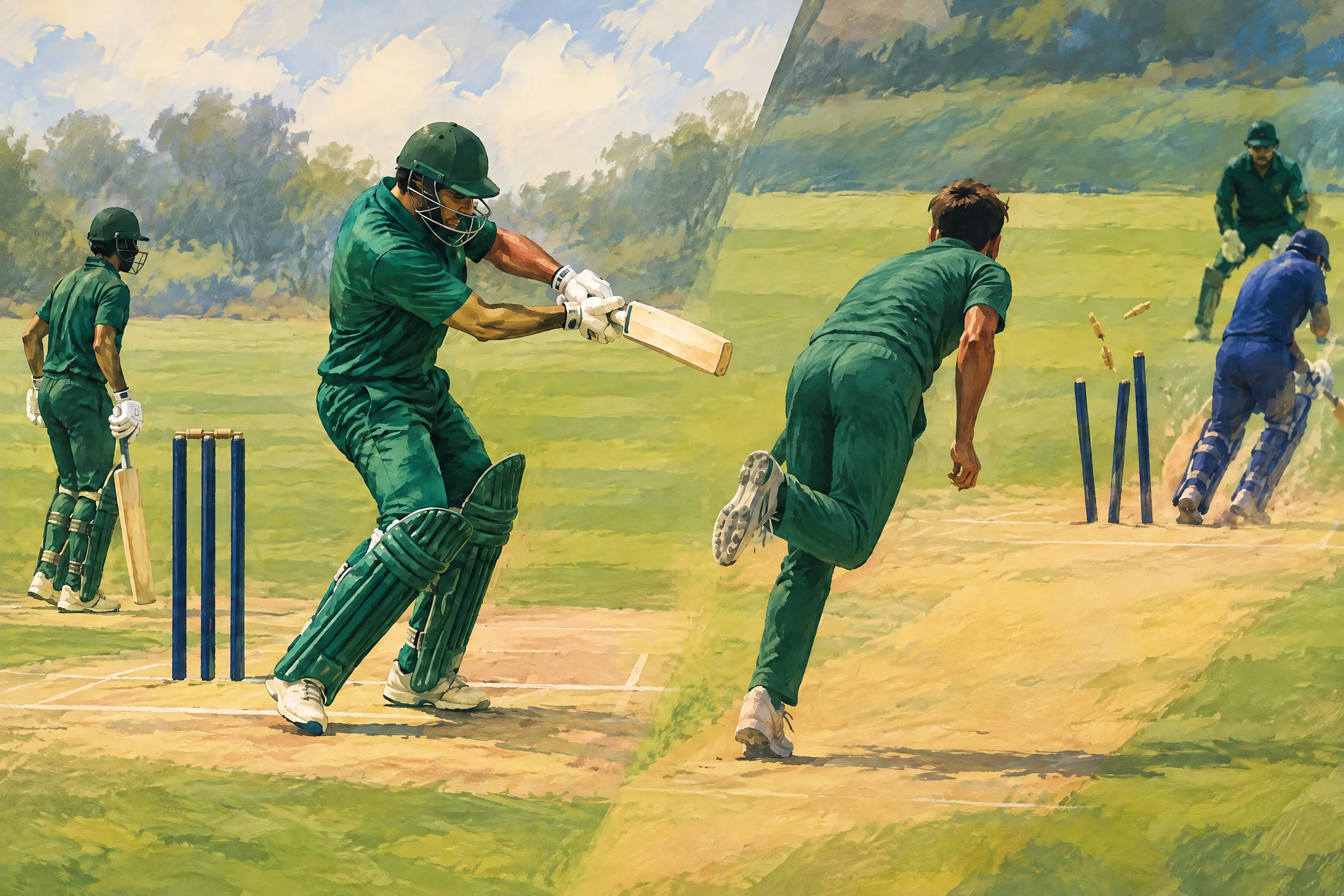
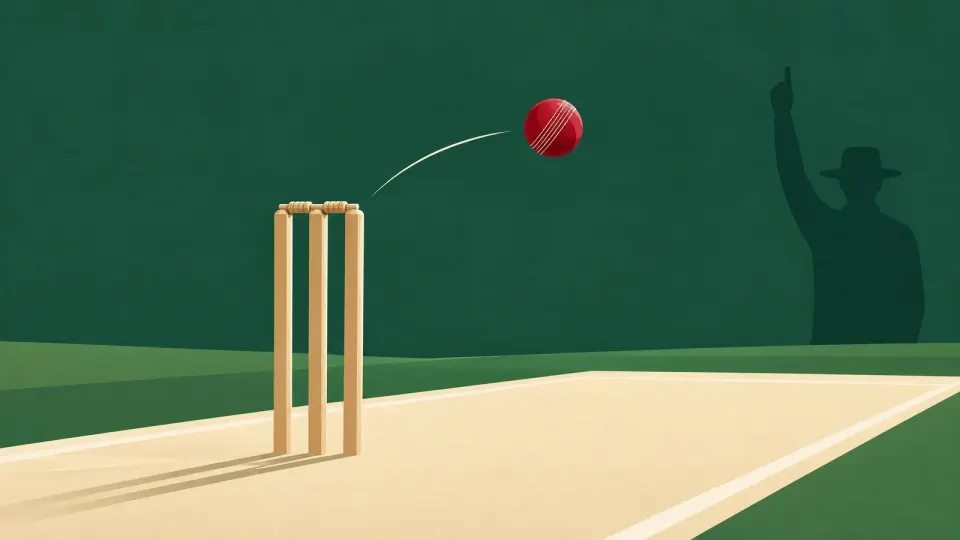
A free hit is one of cricket’s clearest pressure moments: the umpire has called No ball, then raises an arm and circles it to show that the next delivery has special dismissal limits. The important word is "next". A free hit is not the No ball itself, and it is not a licence to do anything. It is a consequence written into the playing conditions for a particular competition. In the current ICC men’s ODI and T20I, and women’s T20I conditions, it follows a called No ball. The MCC’s basic Laws set out what a No ball does, but do not by themselves create a free hit. That distinction is the starting point for reading the situation properly.
First separate the No ball from the free hit
The No ball is the original infringement. Under MCC Law 21 on No balls, it brings an immediate one-run penalty, does not count in the over and does not make the ball dead. Other runs may still be scored while that ball remains live. A No ball can arise for more than the familiar front-foot overstep: the Law also covers, among other cases, an unfair arm action, certain foot faults, a ball bouncing more than once before the popping crease, a delivery passing over the striker’s head after pitching, and specified fielding or unfair-play infringements. The exact competition conditions can add or modify operational detail, so the umpire’s call and the match regulations matter.
The free hit is the separate delivery after that call. The current ICC men’s ODI conditions and men’s T20I conditions say it follows a No ball called for **all modes** of No ball, and is for whichever batter is facing it. The current ICC women’s T20I conditions use the same approach. So it is not limited to a front-foot overstep. If the batters completed an odd number of runs on the No ball, the other batter may be the one facing the free hit.
What happens if the free-hit delivery is illegal?
The benefit does not disappear just because the bowler sends down another illegal ball. Under ICC clause 21.19, if the free-hit delivery is any kind of No ball or a Wide, the next delivery becomes a free hit for the batter then facing. The key practical point is to follow the striker and the next delivery, rather than treating the free hit as a single numbered ball in an over. A Wide also does not count as a legal ball. MCC Law 22 on Wides confirms that a Wide carries an instant one-run penalty, leaves the ball live and does not count in the over.
Which dismissals are still possible?
This is where the phrase "free hit" can mislead. The batter is not simply invulnerable. The ICC conditions say the striker can be dismissed only in the ways that apply when a No ball has been called, even if the free-hit delivery itself is called Wide. The No-ball list is short: **Run out, Obstructing the field and Hit the ball twice**. A striker therefore cannot be bowled, caught, leg before wicket, stumped or hit wicket from an ordinary free-hit delivery. The same current interpretation is independently explained in Wisden’s account of the ICC rule.
A run out remains a real risk because the ball is live. MCC Law 38 on run out says either batter may be out while the ball is in play if out of their ground when a fielder fairly breaks the wicket, subject to stated exceptions. That is why a batter who swings freely still has to make their ground when attempting a run. It also explains why a free hit does not turn a mis-hit or a missed shot into a dead ball: fielders can return the ball, batters can run and a run-out appeal can still matter.
The field usually has to stay put
The fielding captain does not receive an unrestricted chance to reset after the No ball. ICC clause 21.19 says neither field changes nor exchanges of individuals between fielding positions are permitted for the free hit. There are two stated exceptions. First, a change of striker permits the field to change under the relevant field-change provision. Second, if the No ball was called for a fielding-restriction breach, the field may move only as far as needed to correct that breach. That is why a completed single off the original No ball can be more consequential than it looks: it changes who faces and may unlock the prescribed field-change exception.
The bowler is different. The ICC conditions expressly allow a change of mode of delivery for the free hit, provided the bowler follows the normal notification rule. In plain terms, a bowler is not forced to repeat the same over-the-wicket or round-the-wicket, right- or left-arm mode solely because a free hit has been awarded. It is still a legal delivery only if the applicable delivery and playing-condition requirements are met.
How to read the umpire’s signals and the score
In the ICC white-ball conditions, the bowler’s-end umpire first gives the normal No-ball signal, then indicates the coming free hit by extending one arm straight up and moving it in a circle. The score already includes the No-ball penalty and any runs from that live delivery; the following free-hit ball is a new event. Do not add a separate automatic run merely because the free-hit signal is shown. The free hit changes the next ball’s dismissal conditions. Its runs are scored from what actually happens on that delivery, subject to the normal scoring rules.
Do not assume every competition uses it
The safest answer to "is this a free hit?" begins with the competition. The ICC’s playing-conditions hub publishes separate documents for men’s and women’s formats. Its current men’s Test Match Playing Conditions contain the No-ball provisions but no clause 21.19 free-hit provision, whereas the cited limited-overs international documents do. Domestic and age-group competitions can publish their own variations. For example, Queensland Cricket’s T20 conditions reproduce the basic free-hit framework but include competition-specific detail. Check the match’s regulations rather than importing a television rule into every form of cricket.
A quick way to follow the next ball
When a free hit is signalled, work through four questions. Was a No ball actually called? Which batter will face the following delivery after any runs? Is that following delivery legal, or does another No ball or Wide extend the free hit? Finally, has the field moved only within the stated exceptions? That sequence captures the rule’s purpose: a limited-overs penalty for an illegal delivery, not a guarantee of runs or immunity from every dismissal. For another scoreboard distinction that often causes confusion, read our guide to run out and stumped dismissals.
- International Cricket Council (ICC) — Playing Conditions: current men’s and women’s international documentsAccessed 28 September 2026
- International Cricket Council (ICC) — ICC Men’s One-Day International Playing Conditions (effective July 2025), clauses 21.14–21.19Accessed 28 September 2026
- International Cricket Council (ICC) — ICC Men’s Twenty20 International Playing Conditions (July 2025), clauses 21.14–21.19Accessed 28 September 2026
- International Cricket Council (ICC) — ICC Women’s Twenty20 International Playing Conditions (July 2026), clauses 21.14–21.19Accessed 28 September 2026
- Marylebone Cricket Club (MCC) — Law 21: No ballAccessed 28 September 2026
- Marylebone Cricket Club (MCC) — Law 38: Run outAccessed 28 September 2026
- Wisden — The ICC have changed the Free Hit ruleAccessed 28 September 2026
- Queensland Cricket — Premier Cricket T20 Playing Conditions 2024–25, clause 9.2Accessed 28 September 2026
This article presents SportsHub4U editorial coverage. Where recorded, supporting sources and their access dates appear below. A publication-control check is not a human reviewer’s endorsement or a guarantee of factual accuracy. See the editorial standard for automation and correction procedures.